Pharma Cleanroom FRP Doors: Seamless Flush Hygiene, Airtight Hermetic Seals & GMP Compliance
Pharmaceutical cleanrooms operate under demanding hygiene and contamination-control conditions. Doors are opened and closed repeatedly, exposed to cleaning chemicals and disinfectants, and positioned between areas that may operate under different pressure conditions.
For this reason, a cleanroom door cannot be selected like an ordinary commercial door. Surface design, cleanability, durability, sealing, frame construction and compatibility with the room environment all need to be considered.
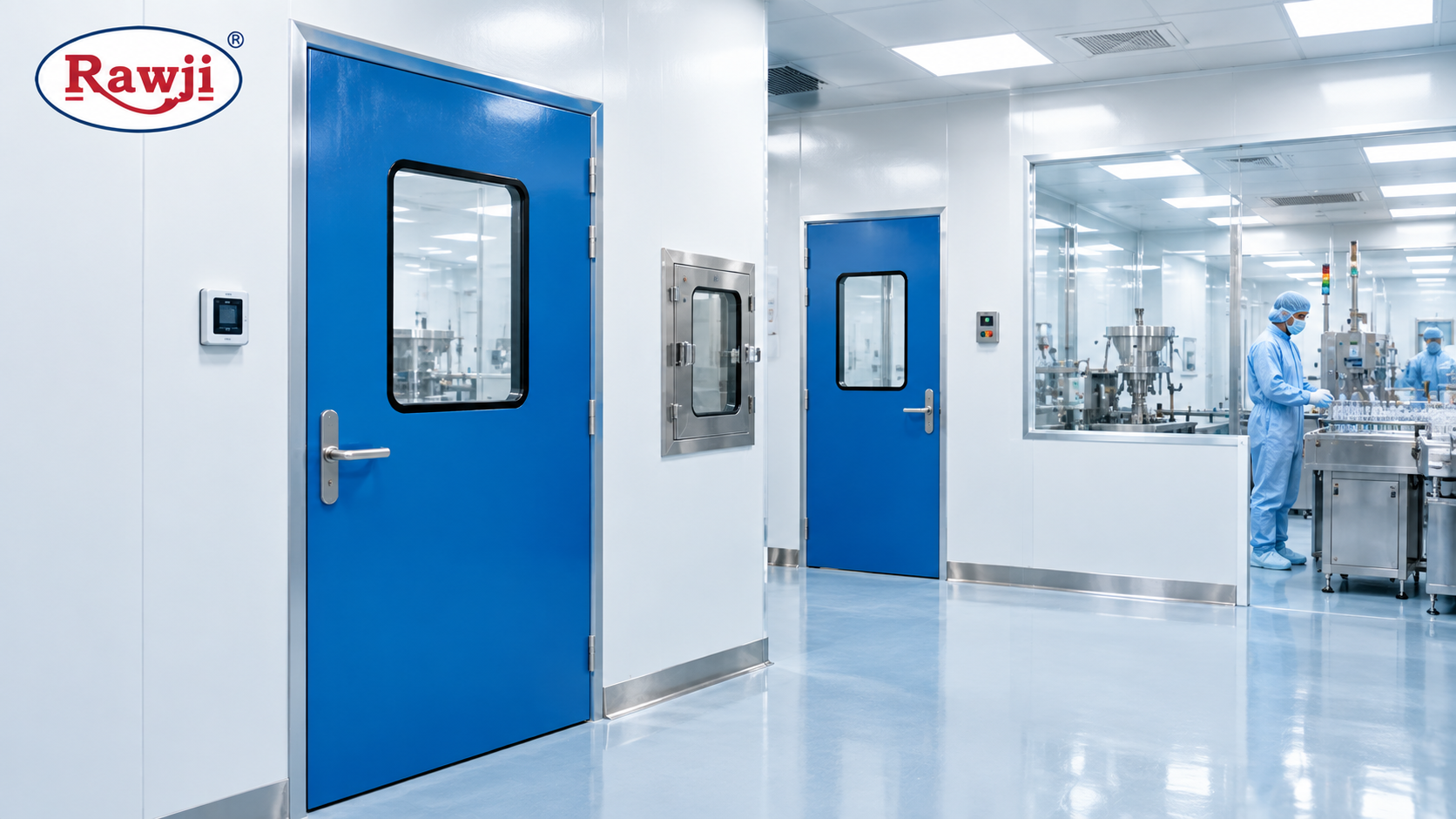
Pharma cleanroom FRP doors are one option for pharmaceutical manufacturing areas, laboratories, hospitals and other controlled environments where moisture resistance, hygiene and low-maintenance performance are important.
What Makes a Cleanroom Door Different?
A cleanroom door should help maintain the intended environmental conditions rather than becoming a source of contamination or difficult-to-clean surfaces.
Common requirements include:
- Smooth and easy-to-clean surfaces
- Minimal dirt-trapping joints and gaps
- Resistance to frequent cleaning
- Moisture resistance
- Chemical resistance
- Durable door and frame construction
- Suitable sealing around the opening
- Compatibility with the cleanroom layout
- Easy operation during frequent movement
The exact specification should depend on the room classification, pressure differential, cleaning protocol and pharmaceutical process.
Why FRP Is Considered for Pharmaceutical Cleanrooms
FRP, or Fibre Reinforced Plastic, provides a non-porous composite surface that can be suitable for environments where moisture and repeated cleaning are concerns.
Unlike conventional wood-based doors, FRP does not absorb moisture in the same way and does not rot. Properly manufactured FRP doors can also provide resistance to many industrial chemicals and cleaning environments.
Rawji Exports manufactures FRP doors for industrial and commercial applications, including environments such as pharmaceutical plants, hospitals and other facilities where corrosion resistance and hygiene are important.
For buyers comparing different solutions, the important point is to select the FRP construction, core, frame and hardware according to the actual application instead of treating every FRP door as identical.
Seamless Flush Surfaces Help With Cleanroom Hygiene
A cleanroom door should be easy to wipe down and should not unnecessarily create places where dust, moisture or residue can accumulate.
A flush door design helps create a cleaner visual and physical surface with fewer protruding elements.
This is particularly useful in pharmaceutical and laboratory environments where doors may be cleaned frequently.
When selecting pharma cleanroom FRP doors, buyers should therefore look at:
- Door-skin finish
- Surface smoothness
- Frame-to-door interface
- Hardware design
- Door bottom clearance
- Sealing arrangement
- Joints and exposed edges
- Cleaning compatibility
The objective is not simply to purchase an FRP door, but to create a door assembly that fits the hygiene requirements of the facility.
Airtight and Hermetic Sealing: What Does It Actually Mean?
The phrase “airtight” or “hermetic” should be used carefully.
A door itself does not automatically create a hermetically sealed cleanroom. The overall performance depends on the door leaf, frame, gaskets, hardware, installation quality and surrounding wall construction.
For areas with pressure differentials, appropriate sealing can help minimise unwanted air leakage around the door.
This is particularly important where cleanroom airflow and pressure cascades are part of the contamination-control strategy.
Therefore, pharmaceutical buyers should ask the manufacturer or door supplier for the applicable sealing and installation specifications rather than relying only on the word “hermetic.”
FRP Cleanroom Doors vs Conventional Doors
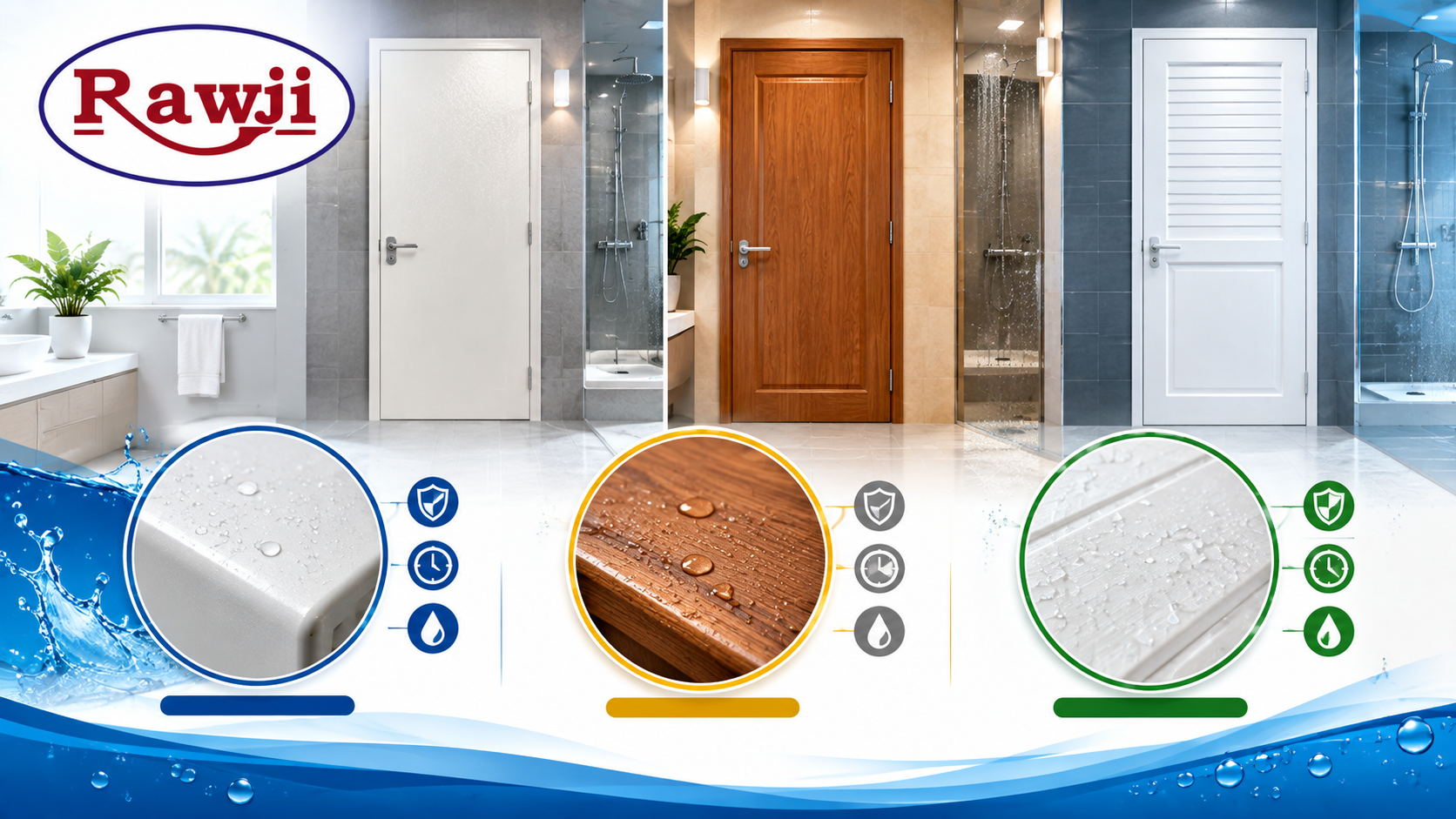
Traditional wooden doors can be difficult to maintain in continuously wet or frequently cleaned environments because moisture can affect the material over time.
Metal doors can provide strength, but the choice of metal, coating and environmental exposure can affect long-term corrosion performance.
FRP offers a different material approach.
FRP Doors
- Moisture resistant
- Corrosion resistant
- Easy to clean
- Lightweight compared with many metal constructions
- Suitable for demanding industrial environments
- Available in different colours and configurations
Conventional Metal Doors
- High mechanical strength
- Familiar fabrication methods
- Wide range of hardware options
- Performance depends on metal grade and protective finish
Wooden Doors
- Suitable for many conventional interiors
- Easy to fabricate
- Wide range of finishes
- Less suitable for environments with continuous moisture and aggressive cleaning requirements
The right material depends on the facility, cleaning procedure, traffic level, room conditions and required performance.
Important FRP Door Features for Pharma Plants
1. Flush Door Surface
A smooth flush surface can simplify routine cleaning and reduce unnecessary dirt-collecting areas.
2. Chemical Resistance
Pharmaceutical facilities may use cleaning chemicals, disinfectants and other substances. The selected FRP material should be suitable for the expected exposure.
3. Strong Door Frame
The frame is as important as the door leaf. A properly specified frame helps maintain alignment, sealing and long-term operation.
4. Suitable Gaskets and Seals
Gaskets can help control air leakage around the door perimeter where the cleanroom design requires controlled sealing.
5. Impact Resistance
Doors in manufacturing facilities may experience frequent trolley, equipment or personnel movement. The construction should therefore be selected according to traffic conditions.
6. Easy Maintenance
A durable, non-porous surface can reduce the maintenance associated with moisture-related deterioration.
For general industrial applications, you can also explore Rawji's wider range of FRP products for industrial and infrastructure projects. FRP Products & Industrial Solutions
Where Are Pharma Cleanroom FRP Doors Used?
Depending on the design and specification, FRP doors can be considered for:
- Pharmaceutical manufacturing areas
- Formulation rooms
- Packaging areas
- Laboratories
- Sampling rooms
- Material transfer areas
- Controlled storage areas
- Hospital cleanrooms
- Biotechnology facilities
- Food and healthcare processing environments
The required door specification will vary according to the room function and environmental conditions.
Why Door Sealing Matters in Pharmaceutical Facilities
A pharmaceutical cleanroom may operate with controlled air pressure between adjacent rooms.
For example, one room may need to remain at a higher pressure than an adjoining lower-classification area. If the door has excessive leakage or poor sealing, maintaining the intended pressure relationship can become more difficult.
This is why door selection should consider the complete door assembly, including:
- Door leaf
- Frame
- Gaskets
- Hinges
- Locking mechanism
- Bottom seal
- Installation
- Wall interface
A well-designed door cannot compensate for poor installation or an unsuitable cleanroom envelope.
Choosing the Right Pharma FRP Door Manufacturer
Before placing a bulk order, pharmaceutical procurement teams should evaluate more than the quoted price.
Ask the manufacturer about:
Door construction: What is the skin and core construction?
Thickness: Is the thickness suitable for the expected traffic and application?
Frame: Is the frame FRP, GI, stainless steel or another material?
Sealing: What type of gasket and sealing arrangement is provided?
Hardware: Are hinges, locks and other hardware suitable for the cleanroom environment?
Chemical exposure: Has the material been selected for the facility's cleaning chemicals?
Installation: Does the supplier provide installation guidance or support?
Customization: Can dimensions, colours, vision panels and hardware configurations be customised?
Rawji's industrial FRP door range includes options for factories, hospitals, pharmaceutical facilities, warehouses and other demanding environments. Industrial & Commercial FRP Doors
Pharma Cleanroom FRP Doors: What Should Buyers Avoid?
Several mistakes can reduce the effectiveness of an otherwise good cleanroom door.
Choosing Only on Price
The cheapest door may not provide the required construction, sealing or durability.
Ignoring the Frame
A good door leaf combined with a poorly specified frame can create alignment and sealing problems.
Using Unsuitable Hardware
Hardware should be compatible with the cleaning environment and frequency of use.
Assuming Every FRP Door Is the Same
FRP doors differ in resin, skin thickness, core, reinforcement, frame and hardware. The specification should match the application.
Treating “GMP Compliant” as a Product Label
GMP compliance relates to the broader facility, processes, equipment, documentation and quality system. A door can support a GMP-oriented cleanroom design, but the door alone does not make an entire facility GMP compliant.
FRP Doors for Pharmaceutical Cleanrooms in India
India's pharmaceutical manufacturing sector includes formulation plants, API facilities, laboratories, medical manufacturing units and contract manufacturing facilities.
These environments can require doors that withstand frequent cleaning while maintaining a hygienic appearance and reliable operation.
For projects requiring multiple doors, buyers can evaluate Rawji's pharma and industrial FRP door solutions based on dimensions, quantity, frame requirements, hardware, sealing and site conditions. Pharma & Industrial FRP Door Range
Frequently Asked Questions
Are FRP doors suitable for pharmaceutical cleanrooms?
FRP doors can be suitable for pharmaceutical cleanroom applications when their construction, surface, frame, seals and hardware are selected according to the specific cleanroom requirements.
What is a flush FRP cleanroom door?
A flush FRP cleanroom door has a smooth, relatively continuous surface designed to make cleaning easier and minimise unnecessary dirt-collecting features.
Are FRP doors resistant to cleaning chemicals?
Many FRP constructions provide good resistance to moisture and a range of chemicals, but resistance depends on the resin system, concentration, exposure time and chemical involved.
Are FRP doors GMP compliant?
A door by itself does not make a facility GMP compliant. However, appropriately designed FRP doors can support hygienic and contamination-controlled pharmaceutical environments.
Can FRP cleanroom doors be customised?
Yes. Door dimensions, frame configurations, hardware, vision panels, finishes and other specifications can be customised depending on the manufacturer and project requirements.
Are FRP doors suitable for hospitals?
Yes, FRP doors can be considered for hospitals, laboratories and healthcare areas where moisture resistance, cleanability and durability are important.
Conclusion
For pharmaceutical cleanrooms, the door should be treated as part of the overall contamination-control and facility design rather than as a simple building component.
Pharma cleanroom FRP doors can provide a practical combination of smooth surfaces, moisture resistance, corrosion resistance and low-maintenance performance when correctly specified.
The final selection should consider the cleanroom classification, pressure requirements, cleaning chemicals, traffic level, sealing arrangement, frame design and installation.
If you are planning a pharmaceutical, hospital or laboratory project, you can contact Rawji for FRP door specifications and project requirements. Contact Rawji Exports